Tuesday, October 2, 2018

Blood on my hands: Confessions of Staged Encounters


“…Lend him a live victim” Page 3

This was the first time my blood boiled while reading this heart wrenching, tragic tale of confessions.
So many contradictions in that statement. When did we start playing God, deciding the fates of innocent, ordinary men as per our whims and fancies? Are we now back to barter system, treating humans as nothing more than mere goods?  Are we legalizing trading of humans, which by definition constitutes to human trafficking, a grave offense? And all this for what, a typographical error? So, that’s all a human life is worth now, a mere typo! And the worst, unimaginable contradiction comes from the fact that the person making this statement is one who has taken an oath to protect the very men he wants to victimize. 

In a country which boasts itself of equality for all citizens under the law, why is murder distinguished based on who commits it. Killing in self-defence by an ordinary citizen requires immense proof, but this burden of proof is discharged in case of self-defence by a police officer or army personnel. Unfortunately, this liberty given to security and defence sectors has led to legitimizing encounter killings and murders, the repercussions of which are fatal to democracy and equality.  

We as  a society have developed such a numb attitude towards ‘justified violence’ that even after the 1970s in West Bengal, 1980s in Punjab and 1990s in Kashmir, we continue to watch the same scene right round the corner, without blinking an eyelid, without pausing to be affected by our conscience. Are we more deaf, dumb and blind than an actual disabled person? Have we lost our feelings and deprived ourselves of our virtues? What are we left with then?

Our country boasts of high class intellectuals, lawyers and judges. Then why is it that we have still not moved ahead from the archaic and draconian pre-independence era laws? Probably because we are in some still under the rule of an oppressive regime, with just new definitions and new faces. Can we truly say our country, every inch of it, is truly independent? 

All we have done, since declaring our independence, and continue to do so is passing numerous acts and amendments. The Unlawful Activities (prevention) Act, 1967, Preventive Detention Act, 1950, Madras Suppression of Disturbances Act, 1948, Defence of India Act, 1967, Maintenance of Internal Security Act, 1972, Disturbed Areas Act, 1976, National Security Act, 1980, Terrorist and Disruptive Activities act, 1985, Prevention of Terrorism Act, 2002, and Unlawful activities Amendment Act, 2004. Situation today is the proof that these acts have made no place more peaceful than before, and are mainly used as a tool by the state to deprive an ordinary citizen of this country of his constitutional rights of freedom and equality, making him bound to the mercy of the state. This implies that we are not as free and independent as our constitution tells us, we are only as free and independent as our state wants us to be. Celebrating Independence Day is merely celebrating the liberation of India from the British rule. But surely this is not all that we had aimed for, was it? But, authoritarianism continues to reign in our democracy. 

Have you ever wondered why these cases of illegal and brutal massacres keep repeating? Are we that incapable of learning lessons and improving our defence system? Are we really in a state of war as is suggested by the officials or are we purposefully being kept in this state of war?

A terrorist is kept in custody for months, taken care of well, and provided with an attorney, until a complete legal battle is fought to prove him guilty, even when the actual evidence for his persecution was seen live (on TV) by millions of citizens sitting in their homes. However, such is the irony of our judicial system that 100s of our own countrymen are being illegally abducted and murdered in the name of ‘militants’, without proper evidence or motive, and no one raises an objection. 

Reading the confession of an army personnel, wherein he agrees to have worked with underground groups to catch the so-called militants, makes you wonder, who they were actually protecting. The roles of gangs and unaware citizens seems to have been strategically interchanged. 

A high functioning system cannot work only with the one team. It most definitely requires involvement of all the stake holders. It is a disease worse than corruption and one which plagues our country even after 70 years of independence. 

The issue starts when you start looking at everything as a business, even capturing terrorists. An act that is meant to be protecting and safeguarding the citizens, an honourable act, suddenly becomes a business deal. And the deal has to be profitable no matter what the cost. 

So, basically, it is all about system protecting, nurturing, and emboldening the system. System that comprises of everyone except for the group it has been created for – we, the people.
And quite strangely, the award system for bringing about peace and stability in a conflict area is based on the number of kills rather than the number of peace efforts. It is no wonder then that the number of killings and shootings are always on the rise. Now, who wouldn’t want to get that next award, that next medal of honour!

At a point, you question what is it that makes an ordinary man treat his own kind with extreme cruelty and spite? What is it that forces him to display such indecency, which one would not even expect from lions and tigers? Why is man so eager to gain authority and control over another man’s life?  

By the end of the book (if you do choose to believe what’s written in the book), you neither feel disgusted nor angry. Nothing surprises you anymore. Not all of the breaking news or the horrific incidents. And this is when humanity goes downhill – cruelty met with numbness. 

However, the bitter aftertaste of reading the book lingers on for a long time, and you start to question every event, every article, every opinion and every news put forth before you. And at this point it is for the individual to decide which and how much of the data is to be believed. This is what the book achieves successfully. It makes you question, consider and analyse rather than blindly accept all as the ultimate truth.

Wednesday, August 15, 2018

I Know Why the Caged Bird Sings

I picked up this book on a rainy evening, unaware of the pleasurable journey that lay ahead..


The story begins with 3-year old Angelou and her 4-year old brother. As Angelou describes the lives of southern African Americans during the cotton picking season, it is truly hard to imagine their plight and difficulties they had to endure to sustain their livelihood. Her description of her Momma, her uncle, the Store, the Church are innocent as a child but also have a certain maturity in them. Even as a child, little Angelou is fully aware of her surroundings, the prejudice against the dark-skinned and the hostility of her people towards the white folks, some of which she herself shares. As you venture deeper into her childhood, you realize she is just a normal little kid- mischievous, scared of things unknown, despising fat ugly old men who eat up the 'best' at dinner, and truly affectionate towards her brother.

It is always painful to read about a young 8-year old being abused, more so when the incident occurs in her own house and the abuser is someone she considers to be father-like. The fears of the frightened little girl can almost be felt like it is happening around you. Her guilt of being part of the ‘crime’ rather than a victim displays the innocence and fragile mind of a child.

A major part of the book is based on Angelou’s childhood incidents. This in many ways reminded me of Harper Lee’s To Kill a Mocking Bird. In both novels the main protagonist is a young African American girl describing the world of inequalities and prejudices around in her own simple and uncorrupted words. 


Each chapter introduces a new person in Angelou’s childhood life who adds a new dimension to her world (and the novel’s). There’s never a dull moment in the book, which mostly is a collection of events from Angelou’s younger days, simple yet captivating. The reading is effortless, like a flowing river. Angelou has the remarkable ability to think and write as a child, to perceive the world like a child, and to remember every single detail of her own childhood, every emotion, every drop of rain.

While reading the book I realized, it’s mostly when you are down and out, when life’s filled with melancholy and misery despite the efforts, when you are despised for no fault for yours, that you hear the sacred bell of the Church. Truly, morose and despair bring out the God within people. Through short glimpses into her youth, she paints a larger picture of the way of life of her people during the Racial segregation in the United States.

The effects of war on a city, its people and the society at large are captured best in 14 year old Angelou’s words. How things change, when the oppressed become the masters. How unconsciously people forget where they came from once they have moved to a better place, and their complete disregard to others going down the same lane. But no matter how drastically the city of San Francisco changed from outside, the prejudices and fear lived on within the people.

The confusions and tentativeness adolescence brings with it are well portrayed and anyone who is passing through/ has passed through that phase of life can easily relate to it in the novel. Her struggle to find her individuality and her boldness and determination, which finally help her become the first African American conductor on San Francisco streetcars, are inspiring.

Such is the beauty of Angelou’s writing that the essence of her relationship with her grandmother, mother, brother and father will stay on in your mind days after you finish the novel.

Saturday, August 4, 2018

Half of a Yellow Sun


Overwhelmed! That is how I still feel, days after completing this incredible novel.

The story progresses slowly but steadily, giving the reader sufficient time to connect with each of the character, to understand the rationale behind their decisions, to feel their emotions and sense their touch. It is so delicately woven that even if one word were to be replaced or omitted, it would cause a ripple effect and tear up this beautiful masterpiece. The reader needs to take it all in slowly, feel the pain, the love, the warmth, the despair, careful not to miss a single word, for behind every word lie a million emotions. And one needs to be sensitive and perceptive enough to grasp them.

 The war begins first with few glimpses, when you least expect it. It is almost like a foreboding of things to come. And before you know it, you are diving into it head on.

We are more similar than we realize, in our views about female gender, in our insecurities of intellectual women, in the manner in which our society belittles them, and in how these tough, brave women fight hard to overcome this misogynistic attitude. Every country goes through a women’s movement; it is only the time and place that differs.


It is not an easy task to write about war (I believe portraying it onscreen is relatively easier). One can include gore, graphic details which make the reader’s stomach turn. One can be impassive and undisturbed about it, so as not to invoke any passionate feelings in the reader. But to depict the war in a way that makes you feel it, to experience it, to understand the multitude of emotions going through every character‘s mind, is an art. And Ms. Adichie is a true artist. She brings a depth to the words which make you empathize with the war survivors (or victims, depending on how you see them). This book will make you jump up and listen when the characters are excited, cry when they are tearful and sympathize with their loss. Not many novels can claim to have such as effect on its readers.

War feels the same everywhere. No matter where you live or which culture you follow, whether it is a civil war, a partition, a riot or a world war, the effect it has on us humans is the same. The complex emotions, of loss, anxiety, hatred, misery, felt by the characters will remind you of the sufferings of your countrymen as it reminded me of the heart wrenching stories of my country in 1947. It will also bring out the cruel realities of a war happening in amidst us, currently, that is now in its 7th year.

The story moves seamlessly across time periods, keeping its essence intact. More importantly, it gives you different perspectives of people in a war trodden country; distinct individuals whose lives are intertwined with each other’s.

I stared off reading the book continuously, taking a break only for mundane activities. But as the story progressed, I had to put down the book every few chapters and take a breath. I felt a kind of breathlessness, overwhelmed by the circumstances thursted upon the characters. I took my time soaking it all in, reflecting on the journey of the characters, relating it the happenings around the world today. The book has surely had a deep impact on me and how I see the world, our world.

For a fictional, non-spiritual, non self-help book, based on real situations to be able to make a reader introspect on life is what raises this book above all others.

Wednesday, July 6, 2016

Echo Burning


Keeping a reader engrossed and engaged for nearly 600 pages is not an easy job. But then neither is being a writer. 

Lee Child, in this novel, takes you on a journey filled with twists and turns, full of surprises, that you find yourself turning the pages faster and faster as you are reading. His elaborate descriptions about the landscape of the sparsely populated Echo county of Texas shows his talent as a writer as well as his wide range of vocabulary. I could almost feel the burning heat of the desert, hear the humming of insects and smell the fragrance in the air. This book is a thriller which will keep you thrilled until the end. 

Jack Reacher makes one hell of a protagonist. He is intuitive, smart, calculative, and shrewd. He may be a vagabond, but he is out there to help people who need his help and kill people who need to be killed. And he does both these things with such detachment, one wonders if he is really a human or a robot. Well, he sure does have arms of steel!

Looking forward to read more of his adventures.

Sunday, May 29, 2016

The Teachings of Don Juan: A Yaqui Way of Knowledge


I believe there is always a time and place for everything, even reading a novel. I started reading this book two years back, but for some reason I discontinued it. It was about a month back that I picked it up again. I had to start all over again, but couldn't go past the first page. A couple of books later, I picked The Teachings of Don Juan once again, not knowing that I would be hooked on to it like bees to honey.


And here are my thoughts about this amazing novel.


This point is mentioned in the book by the author himself and also by Walter Goldschmidt in the foreword, but I will reiterate it - most parts of the book will seem unreal and illogical, i.e. if one applies our conventional way of thinking and knowledge. In order to understand and ‘feel’ the book and the teachings of don Juan, one has to let go of our understanding and order of this world and take a step into the world of the sorcerer don Juan. Only then will things make sense, at least a little. And only then will one be able to truly appreciate the teachings of the Guru, put forth by the author as systematically as was possible. To realize the value of this book one has to immerse oneself in the sea of non-ordinary reality initiated by the hallucinogenic substances.  One needs to begin reading with an open mind and learn to acknowledge that there are different worlds surrounding us, and each of these worlds has their own rational and logic. One needs to understand the fact that it is not fair to measure the order and rationality of another world using the units of measurement of our world. Every world has its own unit of measurement. And it is only right to give every world a fair chance, not that it will have any effect on that world if we don’t.


The book contains a series of steps and procedures which are extremely well documented by the author. It is in a way a practical and an experimental book, and thus requires a great deal of patience and passion about the subject to go on turning the pages. The personal experiences of the author feel very real and yet at the same time bizarre. From playing with a dog to flying in the clouds to being a crow, the author's personal experiences are vividly described. One will either believe in him and go on to love the book or one will just laugh off the whole things as fake. There is no middle path.


I thoroughly enjoyed the book and was deeply immersed in the realm of non-ordinary reality. I was actually disappointed when the book ended, as the author could no longer continue his apprenticeship with don Juan. Nevertheless, I can’t wait to begin reading his other novels.

Saturday, May 14, 2016

Matilda

 
I truly admire a writer who has the ability to see beyond his age and generation. An author who can visualize the future and write about the era to come. Or a male author who can present us the entangles within a female mind to perfection. Or others like Roald Dahl, who can go back in time and look at the world through a little girl’s eyes. It is not easy to do these things, to forget who you are and become someone else, but this is what makes an author great!

This humorous and witty book took me back to my school days. How we dreaded our strict Vice Principal, how we loved our sweet, cheerful LKG class teacher , who used to read out stories to us when we had reached class 2, how we looked up to our seniors, how everyone was a friend and how we laughed and played together. Everything in the book seems a bit over-the-top, a little too dramatic, but yet when you look around yourself, you it is all out there.The genius ones, the fickle minded ones, the irreverent and irrational ones, the simple and friendly ones and the rare gem amid all of the above.

The book runs smoothly and can be enjoyed by all age groups alike. T
he illustrations by Quentine Blake complement the story, making it fun to read. Just like any other stories by Mr. Dahl this one too has a twist in the end, though not completely unexpected.
 
Always a pleasure to read his books . 

Friday, May 15, 2015

I Am Malala


For an educated girl like me, who has not faced any real hardship in life, and is living in a free, democratic country, the story of Malala seemed to be one of generations back. But the sad truth is that it isn’t. The story is very much alive and happening even at this moment, not just in one but many countries around the world. Reading the history of our neighboring country made me realize, we are all alike, our cultures, our problems, our dreams for the future, even our politicians! As Malala describes her beautiful, serene hometown, the white mountains behind her house, the fruit trees, the gardens full of flowers, it is sad to see to what state man has brought that down today.

The history and politics of a country plays an important role in the life and mentality of its citizens. Throughout the book, the life of Malala is intertwined with her country’s and her region’s social and political affairs and how they influenced this young leader’s life and her decisions. The political history of our much alienated neighbors is not much different than ours, corruption, nexus between so-called opposite poles, lack of accountability and responsibility, all these are as much a concern for them as it is for us. However, India should consider itself lucky to have been a successful democracy throughout since independence, with no military coup. 

When I used to read about the holocaust, I would wonder how could the world stand watching by the sidelines all the atrocities being committed by the Nazis, how could the world be a silent bystander. But nothing has changed. Even now we are all just mute spectators, watching the powerful rule over the powerless, the innocent crushed under the influential, while we lie on our beds thinking we are far from it all, we are safe. Little do we know, this is exactly what young Malala thought too, until ‘the men in black’ came knocking on her door. 

It is true that children learn from their parents. This is quite evident in Malala’s life as she explains her father’s generosity and determination and her mother’s practicality and helping nature, qualities one can see in Malala from a young age. During the course of reading the book, I would sit in my office and wonder what the hell am I doing here, just whiling away my time fixing another code, when there are young girls out there waiting to get out of their homes, waiting to go to school, waiting for their freedom. What am I really doing for them, for millions of those girls. What is the point of life of money if it cannot be used to help others in need. There is always someone you can help, someone you can stand up for, in your small world and Malala has just shown the world that. 

I would recommend everyone to read this incredible book, to get a perspective of people living through the trauma and fear rather than what is projected by the media and politicians. The book also gives a good insight to the political crises of Pakistan and its history of conflicts. More importantly, this book is for those who are fighting for humanity and for those who need are awaiting a wake-up call to do so. 

Sometimes we fail to realize how fortunate we are. We are so caught up in our insipid worries that we aren’t aware of what’s happening around us. This book is an eye opener in many sense. It has made me feel sad, despaired, strong , courageous and hopeful all at the same time. It has made me feel blessed, blessed for the freedom I have taken for granted. More than that it has made me a more responsible and active human being. This book is more than an inspiration , it is a ray of hope to all those Malalas fighting for their right to education, this book is the silver lining in the black cloud.

Friday, April 17, 2015

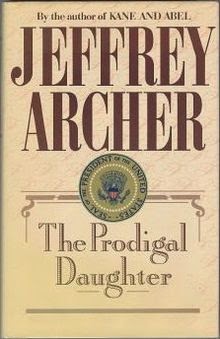
The Prodigal Daughter

The Prodigal Daughter is a perfect sequel to Kane and Abel. Just like the prequel, this book too is interesting, well paced and goes in depth describing the main characters and their life. Each situation is well thought of and written in great detail, at the same time neither being lengthy or long. 

Just like Mr.Archer explained the Britain electoral process in his novel 'First Among Equals', here he explains the American electoral process though not in as much detail. 


The beginning of the story is a flashback of the ending of the first book, though here the Prodigal daughter is the center around which the story revolves. However, one can still enjoy this book even he hasn't read the first. 


The story is divided into three parts:
The Past - laying the foundation for the young girl's present.
The Present - building up the platform for her (and her country's) future.
And finally The Future - the Prodigal's daughter's destiny!
 

Pick up the book and enjoy!

Saturday, December 20, 2014

The Godfather - 1 and 2


There are some movies which cannot be reviewed. We can all have our opinions, but we cannot rate them. These are the movies which go beyond the ratings and awards. The Godfather (1 and 2) is one such movie(s). To give a rating to these two movies would be an insult to its creators and I am not making any attempt to do so. These are two legendary movies, each an epic, a magnum opus for all other ‘Don’ movies.

Thus, I present here some of my views and scenes from the two movies that touched my heart.


                                                                 The Godfather - 1


Right movie from the beginning of the movie, the music is haunting.  It pulls you towards itself, like the fatal attraction of parvana to the shama. Marlon Brando is characteristic. There has never been another Don in history so charming, honorable and one who is also a true family man. A Don who respects his friends and never forgets a favor.

The transformation of Al Pacino from the distant lad who says "That’s my father, Kate, not me” to the emotional son beside his father in the hospital ensuring him “I am with you now” to ultimately the unprecedented words pronounced by him “I am working for my father now” underlines the storyline.

Some of my favorite dialogues by the movie are:

“A man who doesn’t spend time with his family, can never be a real man.”

“I never ask for a second favor when I have been refused the first.”

“Don’t tell me you’re innocent, because it exhausts my intelligence.”

“Don’t ever take sides with anyone against your family.”

“Women and children can be careless but not men.”

The distress look on Brandon’s face when he finds out his war hero son is invariably pulled into the underworld business, the silent tears of acknowledgement when he hears the news of his other son’s murder and simply says “I want no acts of vengeance” shows that some actors don’t need big dialogues to act.

The final stages between father and son are beautifully portrayed. A concerned father advising his son, the last person he thought would be his successor. And the dutiful son consoling his dad that “We’ll get there”.

The music is not just background score but also underlines the essence of the movie. Attentions to details like the steady flow of water, chirping of the birds, are hard to ignore.

The climax of the movie where he lies with so much conviction to his beloved wife completes the transformation of Al from a civilian to the head of the Corleone family.


                                                                 The Godfather - 2


The first scene of the movie, the traditional kissing of the hand of the Don, shows Michael taking over his father’s place. Subsequent scenes show you that though he has taken over his father’s seat, he is nothing like the old Don. The charismatic supremo is replaced by an angry, impatient man.


The movie touches upon the life of immigrants to the new blooming world America wherein begins our former godfather’s story. The story of young Vito Corleone runs parallel to the present day Don. The story of the great man is unfolded beautifully and entwined well with the present.


In one scene, the relationship with present Don and his kid is intercepted by the young Vito Corleone, a young and handsome R. De Niro, playing with his little son, which enhances the contrast lifestyle of the two leading men.

Attention to detail has been given the utmost importance and the scene in which the lead actor watches a play, which though irrelevant to the story is heart touching, is a proof for this.


There are times when you just can’t take your eyes off the well chiseled face of Robert De Niro and long for him to come back on screen.

As the movie unfolds, we see how the Don junior tries hard to keep his personal life & business in place, something which the senior had done with ease. In one scene, the new don’s anger at his wife for having aborted their to be boy child vis-à-vis the distress troubled look on old don’s face while seeing his young son treated by a nurse shows the disparity in the way the two men handled their families.

While Don Vito was as much a family man as he was a Godfather, his son, Michael fails to keep his family together. Like the icy cold winter snow, the relationship between the husband and wife is harsh and dry. True to his words, the “Times were changing “.

As the movie progresses, we see how the once well built, tightly held family by De Niro is slowly losing its strength and grip under his son.

The love for his wife and kids in Niro’s eyes in contrast to the anger in Michael’s eyes for his wife underlines the entire movie.

The story ends similar to the first movie, where all the Don’s enemies are killed, whether they are part of family or not.

Climax of movie sums up the life of Michael and the drastic changes over the years about his views and relationship he had with his father.


Our Trees Still Grow in Dehra


As I started reading the very first page of the book, I wondered what had taken me so long to read this famous author’s books. And by the end of the book I only wished I had found him earlier.

The stories are idyllic and skilfully written, making you laugh, smile and cry all at the same time. They have an effect of a slow sedative, a mystic feeling, just like the mountains in Dehra. Like a Sufi song, they guide you into another world, the words holding your hand making the travel so smooth you hardly realise when the worlds have changed. 


And the mountains, trees, birds, and all the creatures of the forest, form the perfect backdrop for the stories. Every fall of the leaf, every droplet of rain, every movement of a feather is masterfully captured, giving the reader a complete panoramic view of the hills.


The serenity and peace I had felt while reading Paulo Coelho’s philosophical novels, Ruskin Bond has made me feel the same with his witty and charming short stories.


The stories leave you blissful and content, with an after effect similar to drinking Wine, when the taste still lingers in your mouth for a long time.


There is also an underlining social message in each of his stories, subtle but present, which makes the reading all the more worthwhile.


Looking forward to reading his other novels.